Mark J. Andersson: The Craft of Making Things Last
A biographical profile
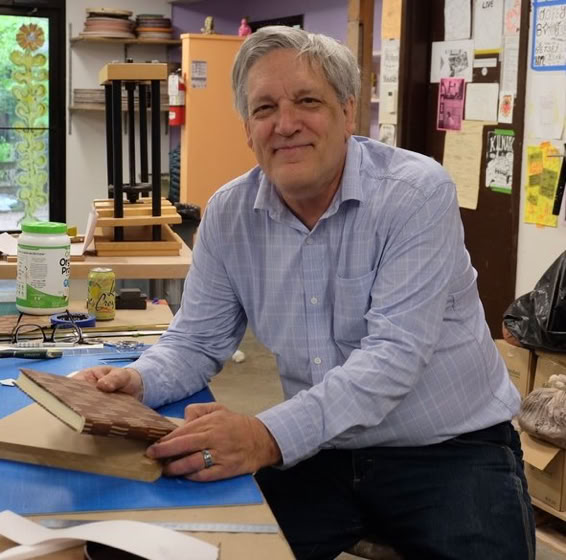
There is something fitting about Mark J. Andersson having spent much of his life repairing books. Book conservation is an occupation built on a particular view of time: that the past deserves attention, that damage need not be the end of a thing, and that preservation is not the same as making something look new. The good conservator intervenes, but does not erase. He respects the evidence of use.
That philosophy seems also to describe something of Andersson himself—a man whose career has moved through several apparently different lives without quite discarding any of them: Seattle schoolteacher, rock musician and songwriter; book conservator; Fulbright scholar; master binder; teacher of other binders; national leader in his profession; and, eventually, proprietor of a bindery in the Arizona desert.[1]
The public record reveals a craftsman of formidable technical accomplishment. But the more telling evidence comes from those he has taught and worked beside. Their recollections suggest something less easily listed on a résumé: exacting standards combined with an absence of pomposity; seriousness about work relieved by a quick, sometimes subversive humor; and a teacher's instinct for making people comfortable without making the work easy.[2]
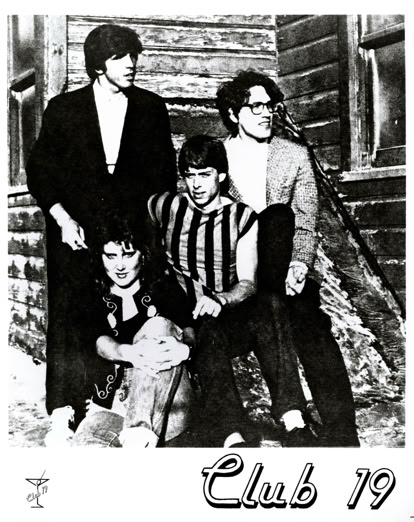
Andersson grew up in Seattle and graduated from Roosevelt High School in 1976. In his younger years he taught high-school social studies and played in a Seattle rock band. He played electric bass, sang, and wrote songs—the latter including one called “Alibi.” Seattle music magazine The Rocket at that time described his band: “They have a very clever 80s pop sound, a funny front man in the bass player, and some catchy original songs.” Another article in that publication said: “They have a Velvet Underground type sound that’s great. Their name sounds stupid but don’t let that turn you off —Mark Andersson’s songs here are killer.” He has remained an ardent admirer of the Kinks and, particularly, Ray Davies, one of popular music's great observers of ordinary human character.
The music is worth noting because it complicates the later image of the painstaking conservator bent over leather and paper. Bookbinding is highly disciplined work, but it is also rhythmic and physical. It requires trained hands, repetition, timing, improvisation within structure, and an ear—or its visual equivalent—for when something is slightly wrong. The distance between bass player and binder may not be as great as it first appears.
His route into conservation was not the tidy path of someone who decided at eighteen what he would become. In Boston in 1987, while working at The First Church of Christ, Scientist, he began repairing books by carefully following Jane Greenfield's book-repair manual. That modest beginning is striking in retrospect. Five years later he would graduate from the demanding two-year bookbinding program at Boston's North Bennet Street School; four years after that he would be in Sweden on a Fulbright; and eventually he would return to North Bennet not as a student but as the head of its bookbinding department.[4]
North Bennet Street is not principally a place where one learns about craftsmanship by reading about it. Students work at the bench for hours each day. Andersson describes the training as six or more hours daily of binding and repairing books over two academic years. Knowledge becomes muscular: how much pressure a tool needs, how thin leather can be pared before weakness replaces suppleness, how thread should pull, how a centuries-old structure distributes stress when a book opens.[5]
After graduating in 1992, Andersson returned to Seattle and worked in Special Collections at the University of Washington Libraries while maintaining a private conservation practice for institutional and individual clients across the country. In 1996 he received a Fulbright grant to study Scandinavian bookbinding and conservation at Uppsala University. He spent the 1996–97 period at Carolina Rediviva, the university library, and used additional grants to study in Finland and Denmark.[6]
The Scandinavian year became more than an impressive line in his biography. It permanently entered his intellectual and technical repertoire. When Andersson later became head of bookbinding at North Bennet Street, he incorporated Swedish and Danish structures into the curriculum. He explained recently that Swedish bindings were useful preparation for conservators likely to encounter Northern European books, while Danish paper bindings offered students an especially good way to learn the difficult skill of paring leather. More than twenty-five years later, those structures remain in the school's curriculum.[7]
In 1998 Andersson returned to North Bennet Street as department head and sole full-time instructor in bookbinding. For nine years he taught students from around the world the architecture of books—historical structures, cloth and leather conservation, fine binding, gold tooling, and the innumerable judgments that separate competent repair from conservation.[8]
A former student, Bexx Caswell-Olson, provides perhaps the most revealing glimpse of Andersson in the classroom. She remembers presenting him with a completed book. Andersson would examine work of this sort and pronounce it acceptable: it was, he might say, something that would be “okay in the real world.” He would then identify its defects, tell the student to make another—and, in Caswell-Olson's recollection, throw the first one away.[9]
It sounds brutal when reduced to those actions. She remembers precisely the opposite. “It wasn't done in a mean way,” she explains. The lesson was to relinquish work that was merely adequate and never confuse “good enough” with mastery. Years afterward she still thinks about it.[10]
There is a useful distinction here between perfectionism and standards. Perfectionism can paralyze; standards give a person something to reach toward. Andersson appears to have understood that a teacher must demand better work without persuading the student that better work is beyond reach.
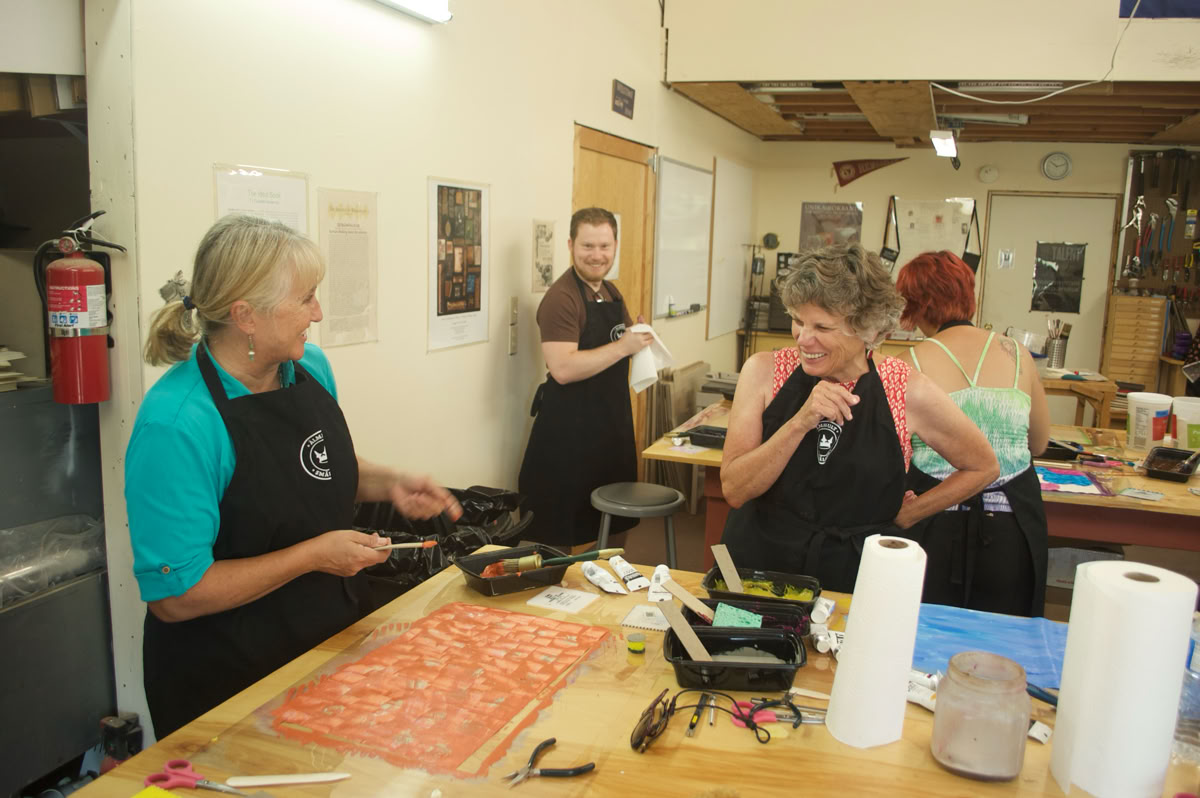
The account of another Panther Peak workshop shows the method at a different level. Andersson would demonstrate one stage himself, then turn the work over to the participants and allow them to do it, intervening when they asked for help. The student who recorded the experience described eight hours of nearly complete concentration and came away exhausted, proud, and newly aware that understanding a book intellectually is not the same as understanding it with one's hands.[11]
Another observer, accompanying young students on a visit to Panther Peak Bindery, noticed something different: Andersson's extensive knowledge of history and craft was presented with “gentle humor.” The students responded with questions. That small observation matters. Expertise can close a room down; Andersson's apparently opened it up.[12]
There is considerable evidence that the humor is not incidental.
On his own website, Andersson recounts a 1995 Seattle television interview in which he decided beforehand that if he managed to use the word shazam, the television editors would be unable to resist including it. He did. They did. His verdict: “Television journalism at its best.”[13]
Writing about an old North Bennet Street promotional video that spends time on all the school's trades, he recommends the bookbinding section and adds, essentially, who cares about the rest of the place? Describing a Tucson PBS appearance that he could not watch at home, he notes the absurdity with a line about the pleasures of “living in the sticks.” And when a national radio program documented events surrounding his last day of teaching, he preserved the story on his website not as a solemn valedictory but because it still makes him laugh and reminds him how much fun he had with the students.[14]
His professional presentations were not exempt. At the Guild of Book Workers' 2004 Standards of Excellence seminar, Andersson began a technical presentation on Swedish half-leather trade binding by subjecting the audience to the “warbling voice” of Eilert Pilarm—described in the Guild newsletter as Sweden's answer to Elvis—before proceeding to the serious business of Scandinavian binding structures.[15]
The pattern is revealing. The humor tends to arrive sideways. It is rarely a performance of wit for its own sake; it punctures formality. In a profession in which extraordinarily skilled people discuss grain direction, recessed cords, vellum reinforcement and the tensile behavior of centuries-old materials, Andersson seems instinctively to know when the atmosphere needs a pinprick.
The same self-deflation appears in his account of moving to Arizona. Before leaving Boston, he told fellow binder James Reid-Cunningham that there seemed to be no one in Arizona doing precisely the sort of work he intended to do. Reid-Cunningham replied: “Maybe there's a reason for that.” Andersson later wrote that he found the remark both extremely funny and faintly horrifying. Was he, he wondered, moving into a metaphorical desert as well as a literal one? He discovered instead a lively Tucson book-arts community.[16]
In 2007 he established Panther Peak Bindery near Tucson. His clients have ranged from private owners to the University of Arizona, the National Park Service, counties and state agencies. In 2019 and 2020 he joined the team charged with conserving and rebinding the Idaho State Constitution at the University of Utah's Marriott Library conservation laboratory. Andersson's portion included putting the covers onto the text block, covering them in leather and decorating the finished binding—work in which mistakes are not easily hidden when the object happens to be a state's founding document.[17]
Yet some of the most interesting evidence of his professional philosophy concerns books with no such civic importance.
Andersson has long advanced what colleagues tease him about as his “one-book theory”: that almost everyone possesses at least one book important enough to want preserved. It might be a rare volume. It might instead be a family Bible, a cookbook, or an object whose market value bears little relationship to its human value. In 2014, while president of the Guild of Book Workers, he told the Los Angeles Times that he believed this personal attachment would continue to sustain a place for book conservation even as printed books became less culturally central. He also had the historical imagination to worry about the future: if people eventually lose the cultural connection to physical books, he wondered, will they still care about “Grandma's cookbook”?[18]
The “one-book theory” survives through his students. A younger conservator, describing Andersson explicitly as her mentor, repeats the principle on her own professional site: everyone has at least one book worth conserving. Elsewhere she writes that her most formative training before graduate school was with Andersson at Panther Peak and that he laid the groundwork for her becoming both a conservator and a binder.[19]
That is another form of conservation: preserving a professional ethic by passing it from one pair of hands to another.
Andersson's standing in his field is not difficult to document. He has been a vice president and two-term president of the national Guild of Book Workers; has belonged to the American Institute for Conservation, Designer Bookbinders and the Fulbright Association; has taught workshops and individual students; has lectured on binding history and the care of personal libraries; has written about Scandinavian structures; and has presented at the Guild's Standards of Excellence seminar. He has also helped make older Guild instructional material accessible, co-spearheading a project to preserve and digitize historical Standards materials.[20]
But institutional titles alone understate what a teacher leaves behind. North Bennet Street's 2026 history of its bookbinding program makes clear that Andersson's period there forms part of an instructional genealogy: Mark Esser taught Andersson; Andersson in turn taught Jeff Altepeter; Altepeter later became department head. The curriculum itself carries the accumulated decisions of these teachers. Andersson says that roughly three-quarters of what he taught came from Esser, to which he added the Scandinavian material and other things he believed his students needed. That admission is characteristic of a mature craft tradition. Originality does not require pretending to have invented one's inheritance.[21]
There is another telling sentence in that history. Reflecting on the curriculum he helped shape, Andersson says he was proud of what he had done but regarded it as “a work in progress, and not the last word.”[22]
For a man associated with exacting standards, that qualification is important. Expertise, in this version, is not certainty hardened into authority. It is accumulated judgment accompanied by the willingness to revise.
His recent Danish research gives that sentence an almost literal sequel. In retirement, Andersson has returned to the Danish bindings he first encountered through his Scandinavian studies—not simply to reproduce them, but to research them historically. What began as a binding structure he taught students has become an object of sustained investigation. Over roughly a decade he assembled and examined dozens of examples, compared their construction, and worked through Danish-language sources. The bindings he once thought he understood became, upon closer examination, more various and more interesting. Retirement has not meant withdrawing from the questions of his craft so much as having time to look at some of them again—more slowly, with more evidence, and with less need to pretend that an earlier answer must remain the final one.
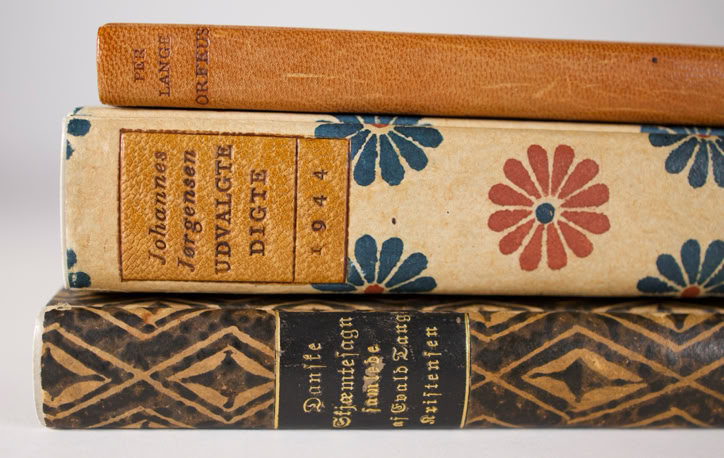
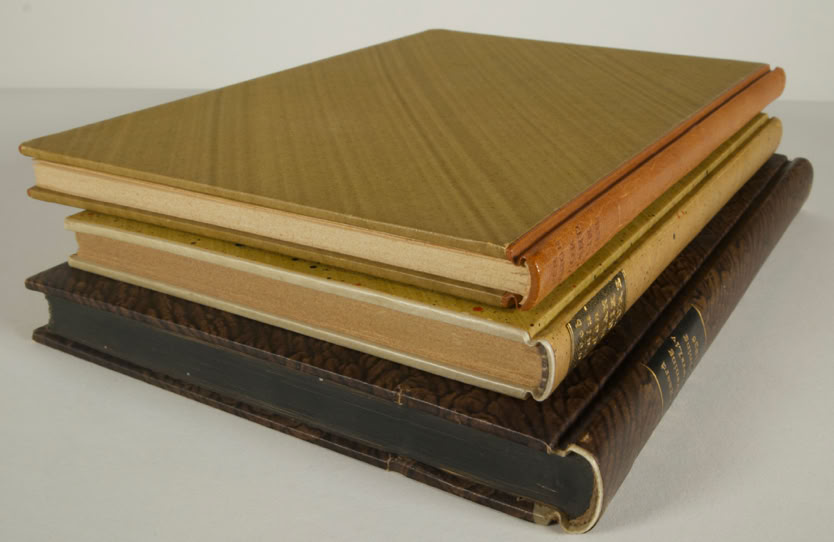
The fullest expression of that research appeared in London in 2023, in volume 43 of The New Bookbinder, the annual journal of Designer Bookbinders. Andersson's substantial article, “Developments in Danish Bookbinding: From Mirror to Millimetre,” traces the development of Danish paper bindings across nearly two centuries, from the economic pressures surrounding Denmark's state bankruptcy in 1813 through the flourishing of twentieth-century Danish craft binding. Its center of gravity is the remarkable period beginning around 1920, when August Sandgren established his Copenhagen bindery, and continuing through the middle decades of the century, when binders transformed inexpensive paper-covered structures into an arena for disciplined craftsmanship and increasingly sophisticated design.[23]
The article is significant not simply because Andersson describes how these books were made, but because he reconstructs a lineage: structures altered in the hands of particular binders, techniques migrated from economy to aesthetics, and terminology that later generations flattened into the convenient category of the “millimeter binding” proves, under historical examination, to conceal several different traditions. The research is the work of a binder looking at history with a craftsman's eye. Details that might appear decorative or incidental to another historian—the extent of a strip of leather, the treatment of a corner, the relationship between spine covering and boards—become evidence.
He developed the argument further for an American professional audience in his 2024 Guild of Book Workers Journal article, “Danish Paper Bindings: More Than Millimeter.” There Andersson begins with a disarming admission: for ten years as an instructor he had taught what he believed were “millimeter bindings.” Further research persuaded him that the category was too crude. He had initially known the historical examples largely through photographs; once he began acquiring and examining actual Danish bindings, distinctions emerged that the photographs had concealed. What had commonly been grouped together as millimeter bindings, he concluded, comprised at least four related but distinct forms: paper bindings, Sandgren-style bindings, Rubow bindings, and millimeter bindings.[24]
For someone whose professional authority rested partly on knowing how books are made, the significance of that admission should not be missed. Andersson did not protect his earlier expertise by quietly adjusting the terminology. He made the correction itself part of the published argument. The teacher who once asked students to discard work that was merely “okay in the real world” appears to apply something of the same standard to his own knowledge: if the evidence requires the work to be done again, one does it again.
Nor has the research remained entirely on the page. In 2025 Andersson taught a course for the Paper and Book Intensive devoted specifically to the Sandgren-style paper binding, devised by the Danish binder August Sandgren. The class placed that structure within an evolution leading through the Rubow binding toward the better-known millimeter binding, and students worked from examples of books actually bound by Sandgren. Nearly three decades after his Fulbright year, Andersson was thus still following a line of inquiry that began in Scandinavia—only now with the advantage of years of objects examined, assumptions discarded, and distinctions sharpened.[25]
That is one measure of influence: what a teacher introduces that is still being taught after he has gone. It is another measure of scholarship that the teacher remains willing to discover that what he once taught was incomplete.
Perhaps that is why the disparate parts of Andersson's life finally do fit together. The social-studies teacher, the bass player and songwriter, the conservator, the Scandinavian scholar and the craftsman at the bench all depend on attentive listening—to people, to history, to structures already there. Ray Davies built songs by noticing eccentricity and pathos in ordinary life. A conservator looks at an old book with something of the same refusal to dismiss the particular. This tear is not that tear. This binding is not that binding. The history of an object matters.
Andersson's career has been devoted to the ancient technology of fastening leaves together so that words can survive their makers. Yet his larger contribution may lie in people rather than objects. Students left his classroom carrying techniques, certainly, but also standards: do not mistake adequate for excellent; understand an object before altering it; respect the history already present; know that mistakes happen and work can be done again; pass on what you know.
And perhaps add one more: when the evidence shows that something you have confidently called by one name is actually four different things, go back and look again.
And don't become so impressed by the solemnity of the enterprise that you forget the occasional shazam.
That combination—technical seriousness without personal solemnity—may explain why Andersson appears to have been memorable to so many students. He could insist that the work mattered enormously without suggesting that he therefore needed to be treated as enormously important.
For a conservator, that is perhaps an appropriate legacy. The object survives. The craft survives. The knowledge moves into other hands. And even what one thought one knew remains open to another examination. The fingerprints of the person who preserved them are deliberately hard to see.